TOTALSPORTEK NEWS
Yorke's Journey: From Pitch to Potential Ghana Coach
20 October 2026
· 5 min read
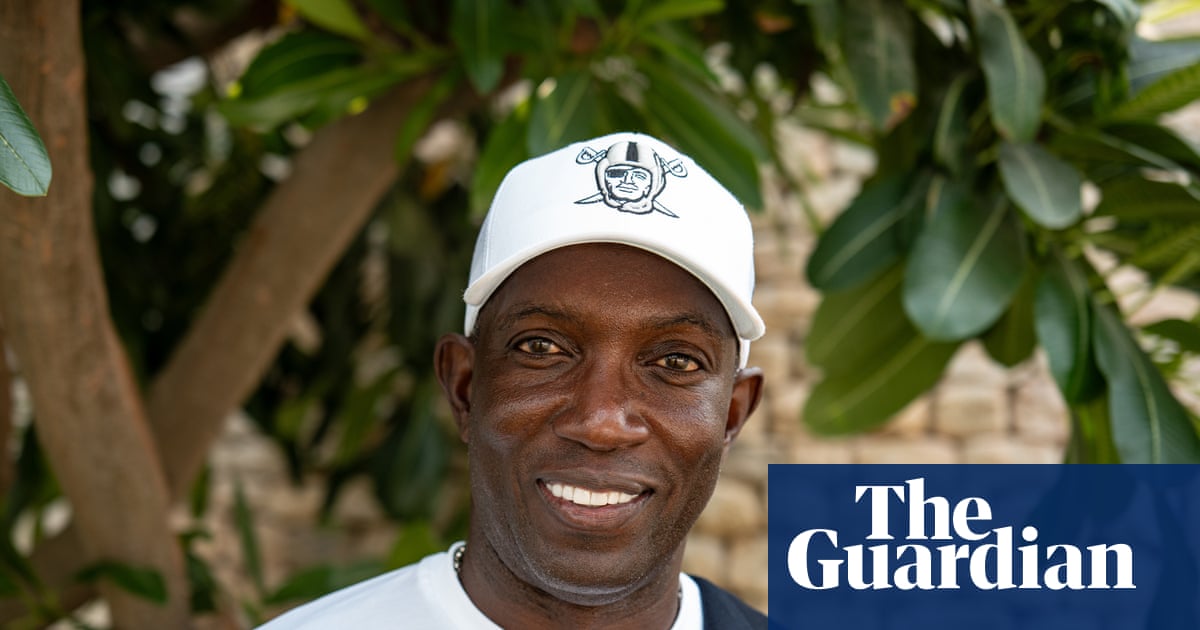
Dwight Yorke is ready to shed his label as just a former player. From his home in Dubai, he asserts, “I’m not a kid trying to get into management for the first time. I’ve done that, and I want that to be clear.”
The clock is ticking for Yorke. Following Carlos Queiroz's departure as Ghana's head coach on October 1, the Ghana Football Association is on the hunt for a new leader. Yorke’s name is among those being considered, alongside Pape Thiaw, Aliou Cissé, and Walid Regragui, as reported by Ghanaian media.
Yorke is frustrated with the way people often reduce his identity to that of a player. He’s tired of being labeled simply a treble winner, a title he says only reflects one remarkable season during his three consecutive Premier League titles at Manchester United from 1999 to 2001. “I’m a manager,” he declares firmly.
In the last four years, Yorke has quietly cultivated a coaching resume that stands apart from his days in the Premier League. His managerial journey began in May 2022 when he led Australia’s A-League All Stars against Barcelona in front of 70,000 fans in Sydney, a match that ended in a narrow 3-2 defeat. “I realized then that I enjoyed it,” he recalls.
In July, he took the reins at Macarthur FC, where he achieved an impressive feat by winning the Australia Cup just three months into his tenure, marking the club's first trophy. However, his stint was cut short when he was dismissed in January 2023, with the team sitting sixth. After a post-match remark about the club being a “pub team” run by “muppets,” he faced the axe.
A FIFA tribunal later ruled that his dismissal was unjust, and the Court of Arbitration for Sport upheld this decision in 2024, ordering Macarthur to compensate him with AU$212,500 (£111,300).
“I wish I’d had the chance to finish what I started,” Yorke reflects, noting that the experience taught him valuable lessons about communication and transparency. “There was a disagreement, but it was resolved amicably, and I’ve moved on.”
After leaving Macarthur, Yorke stayed engaged in football as a pundit for beIN Sports and the Saudi Pro League, while also traveling worldwide to observe coaching practices.
In November 2024, he was called to manage Trinidad and Tobago. Despite the Soca Warriors finishing third in their World Cup qualifying group, missing out on the finals, his time in charge ended shortly after when contract talks failed to reach an agreement. “The decision to end things was out of my control,” he explains.
Yorke is adamant that not qualifying for the World Cup shouldn’t overshadow his successes. “People can overlook success if they focus solely on whether you qualified,” he states. He lost only once in six qualifiers, and his mission was to reignite interest in Trinidad and Tobago football while boosting recruitment. “I was given three tasks and completed two,” he affirms.
Under his leadership, attendance surged, and several American-born players with Trinidadian roots, like CF Montréal’s Dante Sealy and Real Salt Lake’s Kobi Henry, opted to represent the national team. Yorke believes he improved the state of Trinidadian football significantly. “I left it in a much better place than I found it,” he adds.
At the time of his hiring, the TTFA president set qualification as the sole goal. The team ranked 102nd in FIFA standings, trailing Curaçao and Jamaica. “I miss management,” Yorke says. “I miss what we were building.”
Players are reportedly keen on having him return, especially as current head coach Derek King struggles with just two draws and eight losses from ten matches. But the opportunity to coach Ghana is enticing. “It’s a job I’d be interested in, given Ghana’s history and the players available.”
While the Ghanaian FA has yet to confirm any approach, the team is currently at the bottom of their 2027 Africa Cup of Nations qualifying group, struggling after a 2-0 defeat in Côte d’Ivoire and a surprising 4-2 home loss to Gambia. This is a stark fall for a side that just reached the World Cup’s last 32 this summer.
“The talent in the squad is remarkable,” Yorke notes. He reveals that an agent reached out to inform him of Ghana’s interest. “The conversation started there and then made its way to the media before I even knew it.”
From his perspective, Ghana sometimes appears disjointed. The GFA has announced that Kim Björkegren, the women's head coach, will temporarily lead the men’s team for their upcoming qualifiers against Somalia. Yorke believes excessive external noise can disrupt the team, from administration to the players. How does he envision fixing it? “Organization, transparency, and ensuring everyone speaks the same language.”
He recognizes the potential impact of diaspora players, pointing to Ghana’s Antoine Semenyo and Brandon Thomas-Asante as examples of how foreign-born talent can elevate a national side. This mirrors a wider trend seen in recent World Cups, where nearly a quarter of players represented countries outside their birthplace. Yorke's approach is straightforward: identify players, establish their heritage, and present them with a compelling vision. “I’d ensure that what I say aligns with what I do.”
Unlike older managers who might shout to make their point, he asserts, “I’m not sure that approach can last in today’s environment.” He prefers not to criticize players publicly, believing such discussions are better suited for private settings.