TOTALSPORTEK NEWS
Keeping Football Grounded: Lessons from Manchester City's Controversy
21 October 2026
· 4 min read
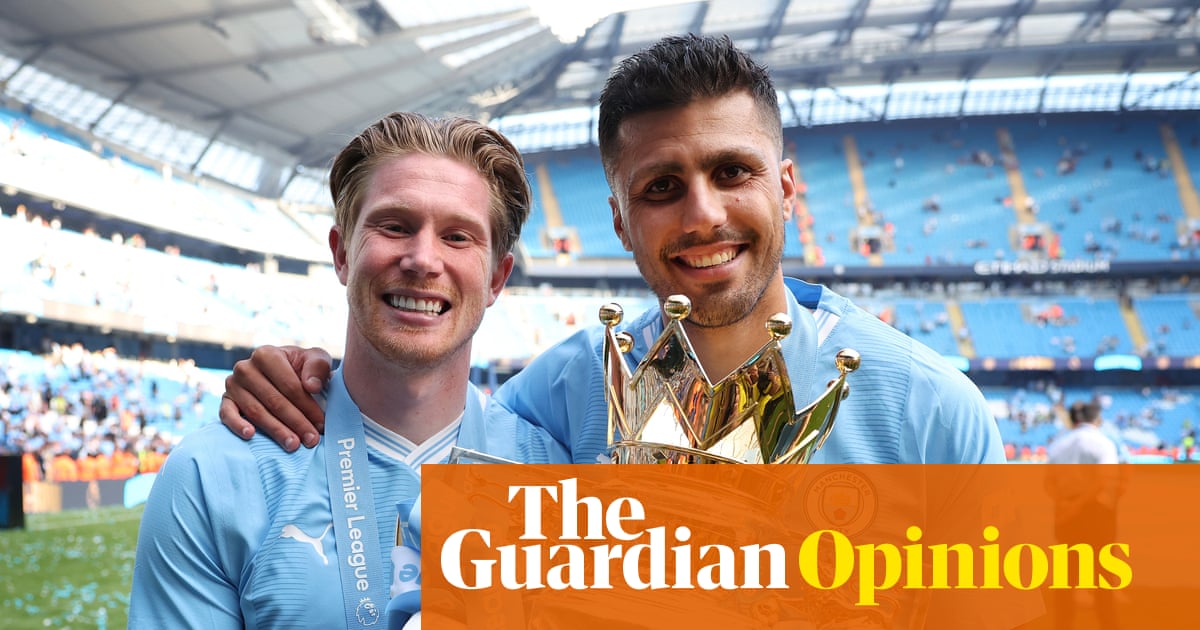
Is it time to reevaluate our stance on Manchester City? Over the years, I’ve written extensively about this club and its influential figures. Looking back, it’s clear they’ve accomplished remarkable feats on the pitch. I’ve always enjoyed watching them play; they function like a perfectly tuned orchestra.
Pep Guardiola, their maestro, orchestrates their play like few others can. His teams are instantly recognizable, even in a black-and-white game. You can see it in their precise passing, the spacing between players, and the clever interplay. It’s no surprise that Guardiola has inspired a new generation of managers, including Vincent Kompany, Mikel Arteta, and Enzo Maresca, with names like Ilkay Gündogan and Rodri likely to follow.
As both a player and a writer, I never had an issue with Manchester City. For a long time, they stood apart from the trend of simply buying the biggest stars. Guardiola himself noted that elite players often overlook City, a club that isn’t even the most recognized football brand in its own city.
Many world-class talents blossomed at Manchester City. Kevin De Bruyne was let go by Chelsea, Rodri was underestimated in Madrid, and Gündogan faced a career crossroads due to injuries. More recently, Gianluigi Donnarumma found himself unwanted in Paris. In Germany, City’s acquisitions often came from clubs like Hamburg and Frankfurt. It wasn’t until they targeted Erling Haaland in 2022 that they pursued someone also on Bayern Munich's radar, which marked a shift from their previous strategies akin to Paris Saint-Germain's.
Yet, despite their successes, City now faces serious allegations of financial misconduct. The club has been found guilty of violating the Premier League's financial regulations from 2009 to 2018, reportedly overspending by nearly €1 billion. As a result, they could face penalties ranging from forced relegation to having titles revoked. City maintains their innocence and is appealing the ruling.
The Premier League's decision to enforce regulations on financial fairness is a necessary step. I also admire Germany’s commitment to the 50+1 rule, which ensures that club members hold majority voting rights. This structure has recently been upheld by the federal cartel office and is under review for exceptions that apply to clubs like Leverkusen and Wolfsburg.
The foundation of our football culture lies in the 50+1 rule. This unique regulation in Germany fosters a balance between investment and member involvement, strengthening the voices of fans and club members. Perhaps this is why German stadiums boast some of the highest attendance figures globally.
What’s the ultimate aim of football? While it operates as a business, its infrastructure relies heavily on public support. This understanding has always shaped my view of the sport. My role as a tournament director at the European Championship has highlighted the importance of community engagement in sports.
Stadiums and clubs must remain spaces for public discourse and community connection. This is only feasible if the grassroots and elite levels of the sport are linked, ensuring public involvement. Football cannot drift away from its origins, as seen with Manchester City. Effective enforcement of rules by a non-profit organization, rather than a commercial entity, is essential.
I’m witnessing a shift in attitudes within business and politics. There’s a growing recognition of the value in investing in non-profit institutions. Companies are beginning to see football as a platform for genuine community engagement and corporate social responsibility initiatives.
In these turbulent times, we need this kind of engagement more than ever. With trust in political parties, churches, and media dwindling, sports remain a unifying force. Football can be a powerful tool for social cohesion, which is why the 50+1 rule is such an advantage for the Bundesliga.
It’s also encouraging to see that rules carry weight elsewhere. UEFA has stood firm against Gianni Infantino’s recent attempts to privatize the World Cup and its revenues. The backlash from the global football community was significant, suggesting that Infantino's actions may have crossed a line.
When actions like those at Manchester City and FIFA are met with accountability, it’s a positive development. Football must actively work to avoid straying from its foundational principles. Only then can it engage meaningfully with society and reinforce its place in Europe.